

Some herbal infusions are appreciated not only for their wellness value, but also for the experience they create. Blue pea flower tea is one of them. Known for its naturally vibrant blue color and delicate floral character, blue pea flower tea is made from the dried flowers of Clitoria ternatea, traditionally used in herbal practices across Southeast Asia for generations. What makes blue pea flowers unique is their simplicity. No artificial coloring, no added flavoring—just naturally vivid flowers that create a visually distinctive herbal infusion.
At 79 Degree, the focus is on preserving that natural beauty by using whole dried blue pea flowers with minimal processing, allowing the flowers to retain their original structure, vibrant color, and brewing quality.
🌿 What Are Blue Pea Flowers?
Blue pea flowers come from Clitoria ternatea, a flowering vine known for its deep-blue petals and naturally rich plant pigments.
Once brewed, the flowers create a naturally blue herbal infusion that is:
caffeine-free
light and floral
visually vibrant
One of the most fascinating features of blue pea flower tea is its natural color transformation.
When lemon or another acidic ingredient is added, the infusion changes from blue to purple due to naturally occurring pigments called anthocyanins. This naturally color-changing quality is one of the reasons blue pea flowers have become popular in wellness beverages, cafés, botanical drinks, and modern tea rituals.
🌱 What Makes Blue Pea Flowers Unique?
Blue pea flowers naturally contain several plant compounds associated with wellness support and antioxidant activity. These include:
Anthocyanins – antioxidant pigments responsible for the blue color
Flavonoids – plant compounds associated with cellular wellness
Polyphenols – contribute to antioxidant activity
Ternatins – unique natural blue pigments found in blue pea flowers
Because these compounds are delicate, excessive processing can affect:
color intensity
floral structure
infusion clarity
Whole flowers help preserve the ingredient’s natural appearance and brewing experience.
💙 Benefits of Blue Pea Flower Tea
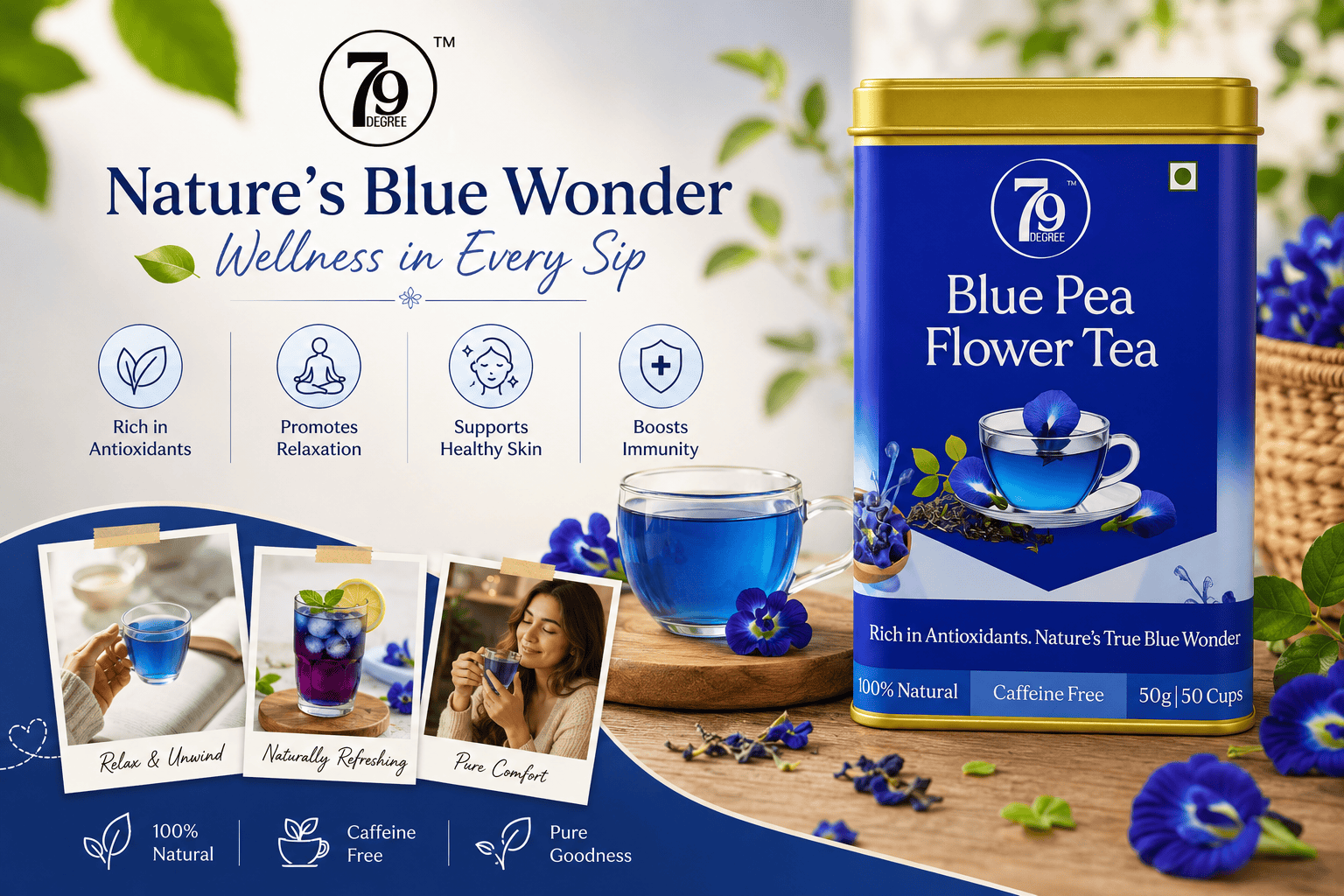
1. Naturally Rich in Antioxidants
Blue pea flowers are especially valued for their naturally occurring anthocyanins, which are associated with antioxidant activity.
Antioxidants help the body manage oxidative stress caused by:
environmental exposure
everyday lifestyle factors
natural cellular processes
The flower’s deep blue color itself reflects the richness of these natural pigments.
2. Supports Skin, Hair & Beauty-Focused Wellness
Blue pea flowers are often included in beauty-focused wellness routines because of their antioxidant-rich profile. These antioxidants are commonly associated with supporting:
healthy-looking skin
protection from environmental stress
overall skin wellness
Blue pea flowers are also traditionally linked to hair wellness support, making them popular in natural beauty lifestyles.
3. Supports Calmness & Better Relaxation Routines
Blue pea flower tea is naturally caffeine-free and gentle in flavor, making it suitable for slower and more mindful routines. Many people enjoy it as:
an evening herbal drink
a calming tea break
part of relaxation-focused rituals
Its soothing nature helps support stress-reducing routines and better nighttime relaxation habits.
4. Traditionally Associated with Cognitive Wellness
In traditional herbal practices, blue pea flowers have long been associated with memory and mental clarity support. Research published in the Journal of Ethnopharmacology explores compounds in Clitoria ternatea related to antioxidant and cognitive-supportive activity, although research is still evolving.
👉 Blue pea flower tea should be viewed as a supportive herbal beverage rather than a medical treatment.
5. Supports Digestion & Everyday Wellness
Blue pea flower tea is traditionally included in wellness routines associated with digestion and overall balance.
Because it is light and caffeine-free, many people enjoy it:
after meals
during hydration routines
as part of mindful eating habits
Its gentle nature makes it easy to include regularly.
6. Supports Balanced Wellness & Weight-Management Routines
Blue pea flower tea is often included in wellness-focused lifestyles because it is:
naturally caffeine-free
light and refreshing
free from added sugar
Many people enjoy it as part of balanced routines related to:
mindful hydration
clean eating habits
metabolism-supportive lifestyles
weight-management goals
Research on Clitoria ternatea has explored its antioxidant-rich anthocyanins and their potential role in metabolic wellness. Studies published in Food Research International discuss blue pea flower compounds in relation to oxidative stress, inflammation, and metabolism-related research models. While blue pea flower tea is not a standalone weight-loss solution, it works well as part of balanced lifestyle habits focused on healthier beverage choices and overall wellness.
🔬 A Simple Scientific Perspective
Blue pea flowers contain naturally occurring compounds such as:
anthocyanins
flavonoids
ternatins
These compounds are associated with antioxidant activity and are currently being studied for broader wellness-supporting properties. Research discussed in the Food Chemistry explores the antioxidant potential of blue pea flower compounds.
From a scientific perspective:
- Anthocyanins → antioxidant support
- Flavonoids → associated with cellular wellness
- Ternatins → contribute to the flower’s natural pigmentation
Although research is promising, findings are still evolving.
💙 Taste & Flavor Profile
Blue pea flower tea has a naturally mild and delicate flavor.
Flavor characteristics:
soft floral notes
light earthy undertones
smooth and clean finish
Its gentle profile pairs well with:
lemon
honey
herbal blends
iced infusions
☕ How to Brew Blue Pea Flower Tea
Hot Brew
For a vibrant and balanced cup:
Use 1.5–2 g of dried blue pea flowers
Add 150–180 ml hot water (90–95°C)
Steep for 3–5 minutes
Strain and serve
The result is a naturally deep-blue herbal infusion with a smooth floral finish.
Cold Brew (For a Smoother Flavor)
Add 1.5–2 g of flowers to 150–180 ml water
Refrigerate for 6–8 hours
Strain and enjoy chilled
Add 1.5–2 g of flowers to 150–180 ml water
Refrigerate for 6–8 hours
Strain and enjoy chilled
For a natural blue-to-purple color transformation, add a few drops of lemon after brewing.
🌿 Why Whole Flower Quality Matters
The quality of blue pea flower tea depends greatly on the condition of the flowers used.
Some products contain:
broken petals
faded flowers
excess powder or fragments
This can affect:
color richness
brewing clarity
overall visual experience
Whole flowers help preserve:
natural structure
vibrant pigmentation
cleaner brewing consistency
stronger visual infusion quality
At 79 Degree, the approach remains simple—use whole dried blue pea flowers with minimal processing so the ingredient keeps the qualities that make it unique.
🍹 Creative Ways to Use Blue Pea Flowers
Blue pea flowers are not limited to herbal tea. Their naturally vibrant color makes them versatile across beverages and culinary creations.
🍸 Mocktails & Cocktails
Used in:
mocktails
cocktails
sparkling botanical drinks
café-style beverages
mocktails
cocktails
sparkling botanical drinks
café-style beverages
🧊 Iced Teas & Lemonades
Perfect for:
iced herbal teas
citrus coolers
cold brews
iced herbal teas
citrus coolers
cold brews
🍰 Desserts & Bakery Applications
Popular in:
cakes
puddings
syrups
frostings
artisan desserts
Their natural color makes them ideal for modern bakery presentations.
⚖️ Who Can Drink Blue Pea Flower Tea?
Blue pea flower tea is suitable for most adults.
Use cautiously if:
pregnant or breastfeeding (consult a doctor)
managing specific medical conditions
taking regular medications
❓ FAQs
1. Why does blue pea flower tea change color?
The natural anthocyanins react to acidity, changing the tea from blue to purple when lemon is added.
2. Is blue pea flower tea caffeine-free?
Yes, it is naturally caffeine-free.
3. What does blue pea flower tea taste like?
It has a mild floral taste with light earthy undertones.
4. Can I drink blue pea flower tea daily?
Yes, in moderate amounts as part of a balanced routine.
5. Is butterfly pea flower the same as the blue pea flower?
Yes, both names refer to Clitoria ternatea.