

Some herbal teas are consumed for energy. Others are appreciated for the calm they bring to everyday routines. Chamomile is one of the most loved among them.
Known for its delicate floral aroma and naturally soothing character, chamomile flower tea has been used for generations in traditional wellness practices associated with relaxation, sleep support, digestion, and mindful living. Made from dried flowers of Matricaria chamomilla, chamomile tea is naturally caffeine-free and widely enjoyed as part of evening wellness rituals.
At 79 Degree, the focus is on preserving the natural floral integrity of chamomile by using carefully selected whole flowers with minimal unnecessary processing, helping maintain their aroma, appearance, and brewing quality.
🌿 What Are Chamomile Flowers?
Chamomile flowers come from the daisy-like plant Matricaria chamomilla, traditionally used in herbal preparations across many cultures. The flowers naturally contain plant compounds such as:
apigenin
flavonoids
terpenoids
antioxidants
These compounds contribute to chamomile’s:
calming herbal character
floral aroma
soothing wellness profile
Because chamomile is naturally gentle and caffeine-free, it is commonly consumed during evenings and relaxation-focused routines.
💛 Benefits of Chamomile Tea
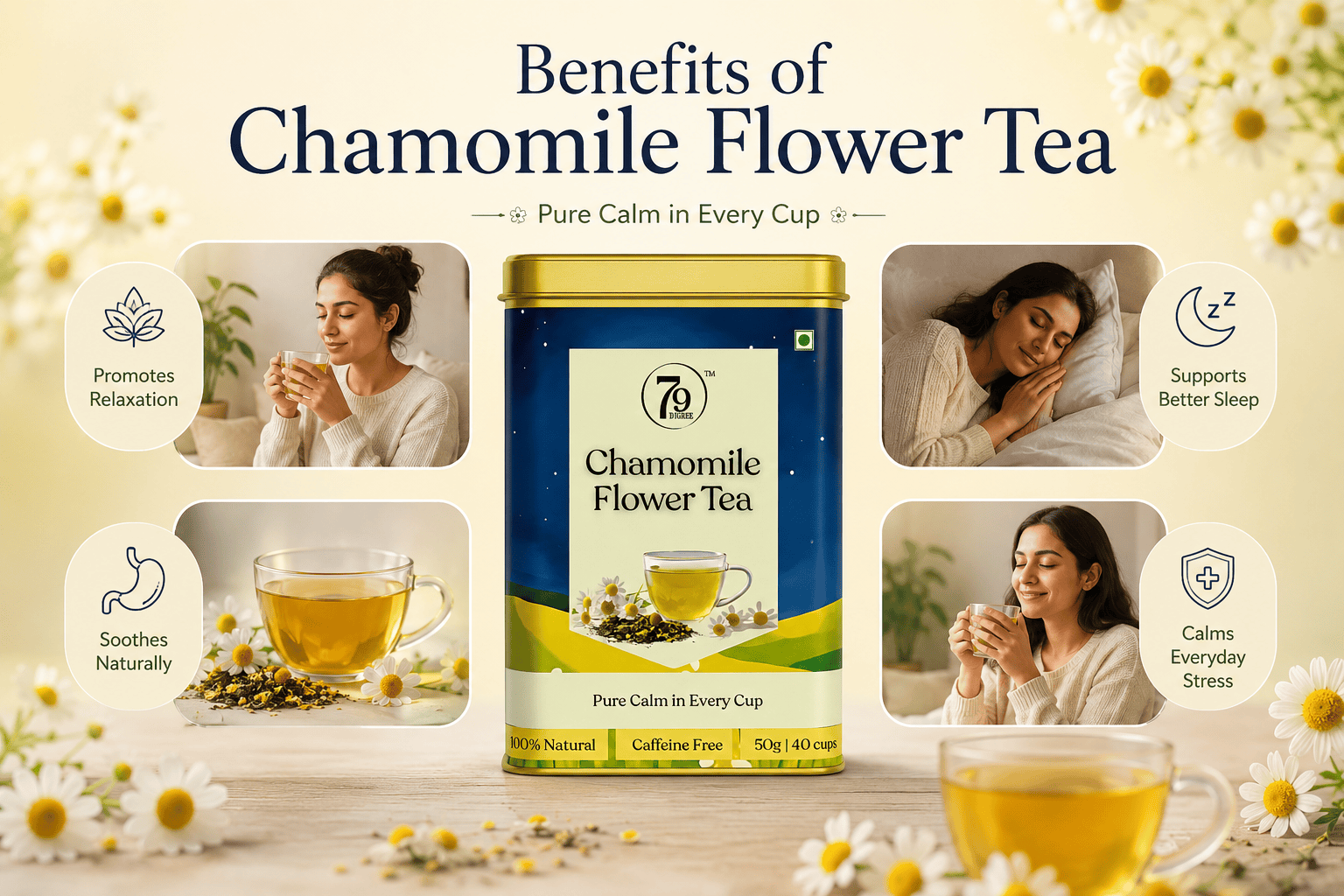
1. Supports Relaxation & Better Sleep Routines
Chamomile is best known for its calming nature. Many people enjoy chamomile tea as part of:
nighttime rituals
relaxation routines
stress-reducing habits
evening wind-down moments
Chamomile naturally contains apigenin, a plant flavonoid being studied for its calming and relaxation-associated properties. Research published in the Molecular Medicine Reports discusses chamomile and its traditional association with relaxation and sleep-supportive wellness practices. Because it is caffeine-free, chamomile tea fits naturally into nighttime routines.
2. Helps Create Calm & Mindful Wellness Rituals
Beyond sleep, chamomile tea is widely appreciated for the calm and comfort it brings to everyday life. Its warm floral aroma and gentle taste make it ideal for:
quiet tea moments
mindful self-care routines
calming breaks during busy days
This emotional comfort is one reason chamomile remains one of the world’s most popular herbal teas.
3. Supports Digestion & Everyday Comfort
Chamomile tea has traditionally been used after meals and during periods of digestive discomfort.
It is commonly associated with:
digestive relaxation
soothing post-meal routines
gentle stomach comfort
Its naturally mild character makes it easy to enjoy regularly.
4. Rich in Antioxidants
Chamomile naturally contains antioxidants such as:
flavonoids
terpenoids
phenolic compounds
These compounds help the body manage oxidative stress caused by:
environmental exposure
daily lifestyle factors
natural cellular activity
Antioxidants are also associated with broader wellness and healthy aging-focused lifestyles.
5. Supports Skin & Beauty-Focused Wellness
Chamomile is often included in beauty and wellness routines because of its soothing and antioxidant-rich nature.
Chamomile tea is commonly associated with:
calm wellness rituals
hydration-focused lifestyles
healthy-looking skin support
Its gentle and comforting profile makes it especially popular in self-care routines.
6. Supports Balanced Wellness & Stress-Reducing Lifestyles
Modern lifestyles often involve:
long screen time
irregular routines
stress-related fatigue
overstimulation
Because chamomile tea is naturally caffeine-free and calming, many people use it as part of:
stress-management routines
evening relaxation habits
wellness-focused lifestyles
Its soothing floral nature helps create moments of pause in fast-paced daily routines.
🔬 A Simple Scientific Perspective
Chamomile naturally contains compounds such as:
apigenin
flavonoids
terpenoids
phenolic antioxidants
These compounds are being studied for their antioxidant and calming wellness-supportive properties. Research discussed in the Food Chemistry explores chamomile’s antioxidant activity and plant-based bioactive compounds. From a scientific perspective:
Flavonoids → antioxidant support
Phenolic compounds → associated with cellular wellness
Although promising, research is still evolving.
🌼 Taste & Flavor Profile
Chamomile tea has a naturally soft and floral flavor.
Flavor characteristics:
gentle floral sweetness
mild herbal notes
smooth honey-like finish
Its comforting profile pairs well with:
honey
lemon
lavender
mint
☕ How to Brew Chamomile Tea
For a calming herbal infusion:
Use 1.5–2 g dried chamomile flowers
Add 150–180 ml hot water (90–95°C)
Steep for 3–5 minutes
Strain and enjoy warm
Optional additions:
honey
cinnamon
lemon
For a stronger floral profile, slightly increase steeping time.
🌿 Why Whole Flower Quality Matters
The quality of chamomile tea depends greatly on the condition of the flowers used. Poor-quality chamomile may contain:
broken flower dust
faded petals
weak aroma
dull infusion quality
Whole flowers help preserve:
floral appearance
natural aroma
cleaner brewing experience
richer infusion quality
At 79 Degree, the approach remains simple—preserve the natural floral integrity of chamomile flowers with minimal unnecessary processing.
🍹 Creative Ways to Use Chamomile Flowers
Chamomile flowers work beyond traditional herbal tea.
🧊 Iced Herbal Teas
Perfect for:
iced floral teas
honey-lemon coolers
calming summer beverages
iced floral teas
honey-lemon coolers
calming summer beverages
🍰 Desserts & Wellness Recipes
Used in:
cakes
syrups
cookies
herbal infusions
wellness desserts
cakes
syrups
cookies
herbal infusions
wellness desserts
🌙 Nighttime Wellness Drinks
Chamomile blends well with:
lavender
cinnamon
warm milk
honey-based evening beverages
⚖️ Who Can Drink Chamomile Tea?
Chamomile tea is suitable for most adults. Use cautiously if:
allergic to daisy-family plants
pregnant or breastfeeding (consult a doctor)
taking sedative medications
❓ FAQs
1. Is chamomile tea caffeine-free?
Yes, chamomile tea is naturally caffeine-free.
2. Can chamomile tea help with sleep routines?
Chamomile is traditionally associated with relaxation and calming nighttime rituals.
3. What does chamomile tea taste like?
It has a soft floral flavor with gentle sweetness and mild herbal notes.
4. Can chamomile tea be consumed daily?
Yes, in moderate amounts as part of a balanced wellness routine.
5. Can chamomile tea be served cold?
Yes, chamomile works well in iced herbal infusions and floral coolers.