

Some herbal ingredients remain relevant across generations because of their naturally functional properties and long history of traditional use. Nettle leaf (Urtica dioica) is one of them. Known for its rich green profile and naturally occurring plant nutrients, nettle leaf has been widely used in herbal wellness practices for supporting everyday health, seasonal balance, and overall vitality. At 79 Degree, the focus is on preserving that natural integrity—using whole dried nettle leaves with minimal processing, so the ingredient retains its original character and nutritional value.
🌿 What Is Nettle Leaf Tea?
Nettle leaf tea is prepared from the dried leaves of the stinging nettle plant (Urtica dioica).
While the fresh plant contains tiny stinging hairs, the leaves become safe and suitable for consumption once dried and properly prepared. When brewed, nettle leaves create a mild herbal infusion known for its:
earthy flavor
nutrient-rich profile
naturally refreshing character
Nettle has been used for centuries in traditional herbal systems across Europe and Asia because of its broad wellness-supporting properties.
🌱 What Makes Nettle Leaves Nutritionally Valuable?
Nettle leaves naturally contain several plant compounds, vitamins, and minerals, including:
Iron – supports normal blood-related functions
Magnesium – contributes to muscle and nerve function
Potassium – helps maintain fluid balance
Polyphenols – associated with antioxidant activity
Chlorophyll – contributes to the plant’s deep green color
Because these nutrients occur naturally in the leaf, maintaining ingredient quality and minimal processing is important.
💚 Health Benefits of Nettle Leaf
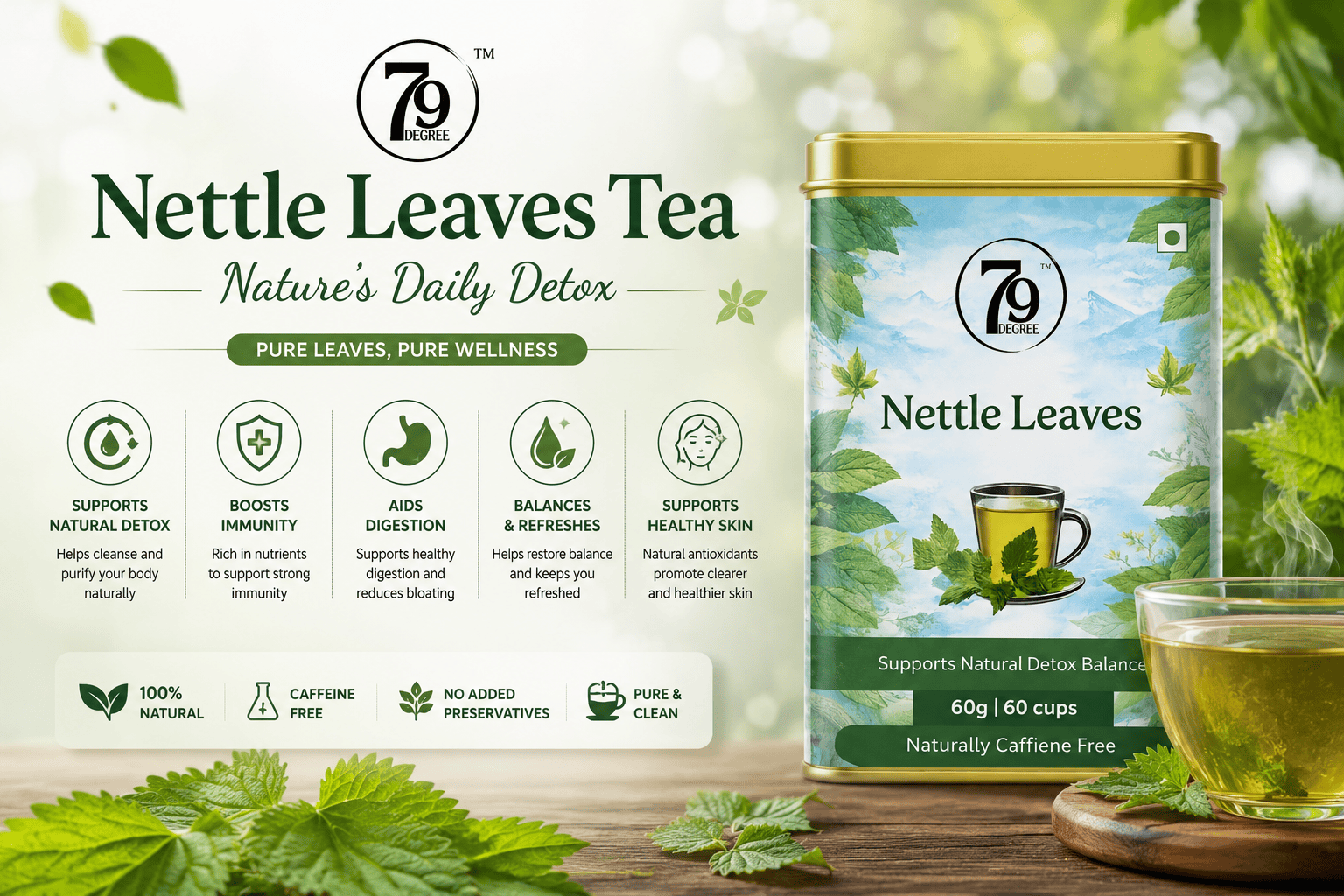
1. Naturally Rich in Iron & Plant Nutrients
Nettle leaf is often valued for its naturally occurring iron content, making it popular in plant-based wellness routines. Iron contributes to:
normal oxygen transport
energy-related body functions
overall vitality
Combined with magnesium and potassium, nettle offers a naturally nutrient-rich herbal infusion.
2. Traditionally Used for Inflammation Support
Nettle leaf has long been associated with supporting the body’s inflammatory response.
Research published in the Phytotherapy Research discusses compounds in nettle that may help reduce inflammatory activity linked to joint discomfort and stiffness.
Because of this, nettle is traditionally used in wellness routines related to:
joint comfort
arthritis-related support
everyday body recovery
👉 While promising, nettle should be viewed as supportive rather than a replacement for medical treatment.
3. May Help Support Seasonal Allergy Relief
Nettle leaf is commonly used in herbal practices during seasonal allergy periods.
Some studies suggest nettle may influence inflammatory pathways linked to allergic responses. Research referenced in the Planta Medica explored its role in managing symptoms associated with allergic rhinitis. Many people include nettle tea during seasonal transitions as part of a broader wellness routine.
4. Supports Cardiovascular Wellness
Nettle contains naturally occurring compounds that may support circulation and cardiovascular balance. Some research suggests nettle may help:
support healthy blood pressure levels
contribute to vascular wellness
assist circulation-related functions
These effects are still being studied, but nettle remains widely associated with heart-supportive herbal routines.
5. Traditionally Used for Urinary Wellness & BPH Support
Nettle root and leaf have both been explored in relation to urinary tract wellness and benign prostatic hyperplasia (BPH). Research discussed in the Journal of Herbal Pharmacotherapy examines nettle’s traditional role in supporting urinary flow and prostate-related wellness. Because of this, nettle is commonly included in wellness routines focused on:
urinary comfort
healthy aging support
prostate wellness
🔬 A Simple Scientific Perspective
Modern research on nettle leaf continues to develop, particularly around its:
antioxidant activity
anti-inflammatory potential
mineral content
From a scientific perspective:
- Polyphenols → antioxidant support
- Iron & magnesium → support normal body functions
- Plant compounds in nettle → may influence inflammatory pathways
Although findings are promising, most studies suggest nettle works best as part of a consistent wellness routine rather than as an instant solution.
👉 Nettle leaf tea is best understood as a supportive herbal beverage, not a medical treatment.
🌿 Taste & Flavor Profile
Nettle leaf tea has a naturally earthy and green flavor.
Flavor characteristics:
mild and herbal
earthy
smooth with a clean finish
Its balanced taste makes it easy to include regularly.
☕ How to Brew Nettle Leaf Tea
Hot Brew
For a balanced and consistent cup:
Use 1.5–2 g of dried nettle leaves
Add 150–180 ml hot water (90–95°C)
Steep for 3–5 minutes
Strain and serve
The result is a smooth herbal infusion with a clean, earthy finish.
Cold Brew (For a Lighter Taste)
Add 1.5–2 g of nettle leaves to 150–180 ml water
Refrigerate for 6–8 hours
Strain and enjoy chilled
Add 1.5–2 g of nettle leaves to 150–180 ml water
Refrigerate for 6–8 hours
Strain and enjoy chilled
This method creates a softer and lighter flavor profile. Optional: Add honey or lemon based on preference.
🌿 Why Leaf Quality Matters
The quality of nettle tea depends greatly on how the leaves are handled and processed.
Over-processing can affect:
flavor clarity
natural structure
overall infusion quality
Whole leaves help preserve:
the natural leaf profile
gradual flavor release
a cleaner brewing experience
At 79 Degree, the approach remains simple—use whole dried nettle leaves with minimal processing, so the tea reflects the ingredient in its most natural form.
🌿 How to Include It in Your Routine
Nettle leaf tea fits easily into everyday wellness habits.
🌞 Morning Herbal Routine
A naturally caffeine-free start to the day.
🌿 Midday Wellness Break
A calming herbal infusion during busy schedules.
🌸 Evening Wind-Down
Light and grounding without heaviness.
💧 Daily Hydration Support
Adds natural variety to hydration routines.
⚖️ Who Can Drink Nettle Leaf Tea?
Nettle leaf tea is suitable for most adults.
Best suited for:
herbal tea drinkers
people reducing caffeine
individuals building wellness-focused routines
Use cautiously if:
pregnant or breastfeeding (consult a doctor)
taking blood pressure, diabetes, or blood-thinning medication
managing kidney-related conditions
❓ FAQs
1. Is nettle leaf tea rich in iron?
Yes, nettle leaf naturally contains iron along with other minerals.
2. Can nettle tea help with seasonal allergies?
Some traditional practices and early studies suggest it may support seasonal wellness.
3. Is nettle leaf tea caffeine-free?
Yes, it is naturally caffeine-free.
4. What does nettle tea taste like?
It has a mild, earthy, and herbal flavor.
5. Can I drink nettle leaf tea daily?
Yes, in moderate amounts as part of a balanced routine.